Rediscover Clear Vision with Implantable Contact Lenses

A reversible, alternative when laser eye surgery isn’t suitable, precision vision correction without removing corneal tissue.
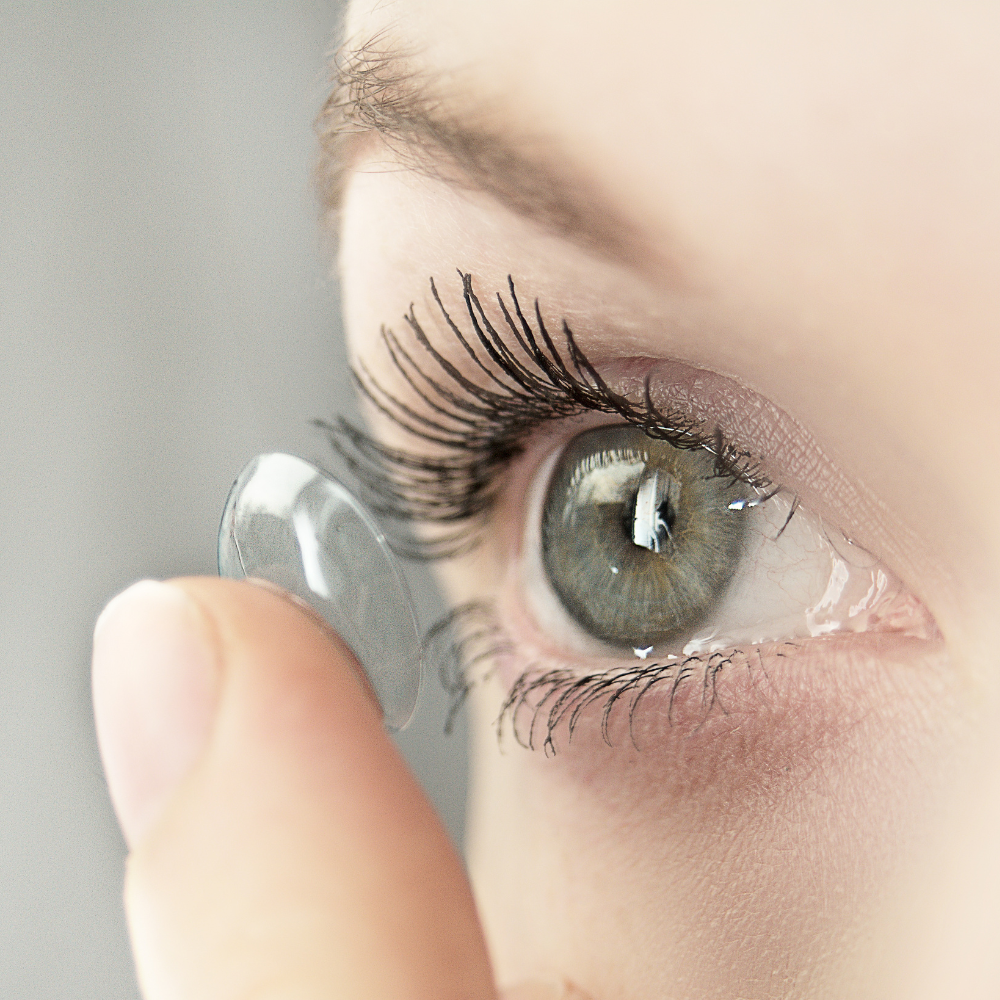
Centre for Sight Implantable Contact Lens Stock Image

At a Glance

  • Key Advantages: Reversible, no corneal tissue removal, good option for thin corneas/higher prescriptions
  • Finance: Transparent prices; 0% options available (via partner finance). 
  • Locations: London, Sussex, Surrey.   
  • Why Choose: Providing implantable contact lens treatment since the year 2000
Centre for Sight Implantable Contact Lens Treatment Page father and son cheers glasses smiling young boy with juice

What is an Implantable Contact Lens?

An implantable contact lens (commonly called an ICL, or “implantable collamer lens”) is a special, very thin lens placed inside the eye between the iris (the coloured part) and your natural crystalline lens (the lens behind the iris).

Unlike ordinary contact lenses, which sit on the eye’s surface, and unlike LASIK/PRK (which reshape the cornea), the ICL is additive, meaning nothing is removed from your eye. Once implanted, you won’t see or feel it. It corrects your vision by bending (refracting) light more precisely onto the retina.

Because it’s additive and (in many cases) removable or exchangeable, ICL offers flexibility and reversibility that laser procedures cannot.


Types of Implantable Contacts

Please be aware that your consultant will recommend the most suitable lens option to suit your eyes and lifestyle needs.

Lens Type Key Features Pros Cons
Standard (spherical) ICL Corrects myopia or hyperopia (no astigmatism) Simpler design; lower cost Doesn’t correct astigmatism (unless combined with other correction)
Toric ICL Has cylinder power to correct astigmatism Treats myopia + astigmatism in one implant More complex alignment; risk of rotation
“EVO” / modern ICL variants E.g. hole in central optical zone for fluid flow (no need peripheral iridotomy) Facilitates aqueous flow, reduces risk of pupillary block Newer designs may have less long-term data (though many now have long experience)

Am I suitable for implantable contact lenses?

To be considered suitable, you will generally need to meet the following criteria:

  • Age: usually ≥ 21 (some say 21–45 or up to 60) with stable refraction
  • Stable prescription for at least 6–12 months (no significant change)
  • Refractive error within the device’s range (e.g. –0.50 to –18.00 D myopia; +0.50 to +10.00 D hyperopia; astigmatism up to ~6 D)
  • Adequate anterior chamber depth (distance between cornea and lens) and safe endothelial cell count
  • Healthy eyes (no active eye disease, uncontrolled glaucoma, uveitis, severe cataract)
  • Realistic expectations and willingness to accept risks

The implantable contact lens procedure may not be suitable for:

  • Very shallow anterior chamber depth (insufficient space)
  • Low endothelial cell count or corneal endothelial disease
  • Active ocular disease (such as uncontrolled glaucoma, uveitis, eye infections)
  • Significant lens opacity or early cataract
  • Pregnancy or nursing (hormonal changes may affect the eye)
  • Unstable refraction or progressive myopia
  • Severe dry eye, severely abnormal cornea
  • Certain anatomical anomalies (angle crowding, narrow angles)
  • Patients beyond a certain age where natural lens changes or cataract risk becomes high
Read More

Centre for Sight woman on her phone calling Centre for Sight on National Call Your Doctor Day

What are the benefits and risks of Implantable Contact Lenses?

Your surgeon will speak with you about the benefits and risks involved before your procedure.

Benefits (vary by procedure):Risks/side effects (not exhaustive):
Clearer vision, possibly reducing or eliminating dependence on glasses or conventional contacts Requires intraocular (inside the eye) surgery (higher inherent risk)
Maintains corneal integrity (no tissue removed)Potential for cataract formation over time
Reversible or exchangeable (if refraction changes or lens becomes problematic) Possible lens rotation (especially in toric design)
Good option for high prescriptions or those unsuited for LASIK Rare risks: infection, inflammation, retinal detachment, pigment dispersion, endothelial cell loss 
Minimal long-term maintenance (no daily insertion/removal) For some patients, full 20/20 vision may not be achieved, or additional enhancements may still be needed 
Often minimal discomfort during procedure

Patient Journey

Enquiry

Fill out our form below and one of our enquiry team will be delighted to help you on the first stage of your journey to clearer vision. 

Diagnostics

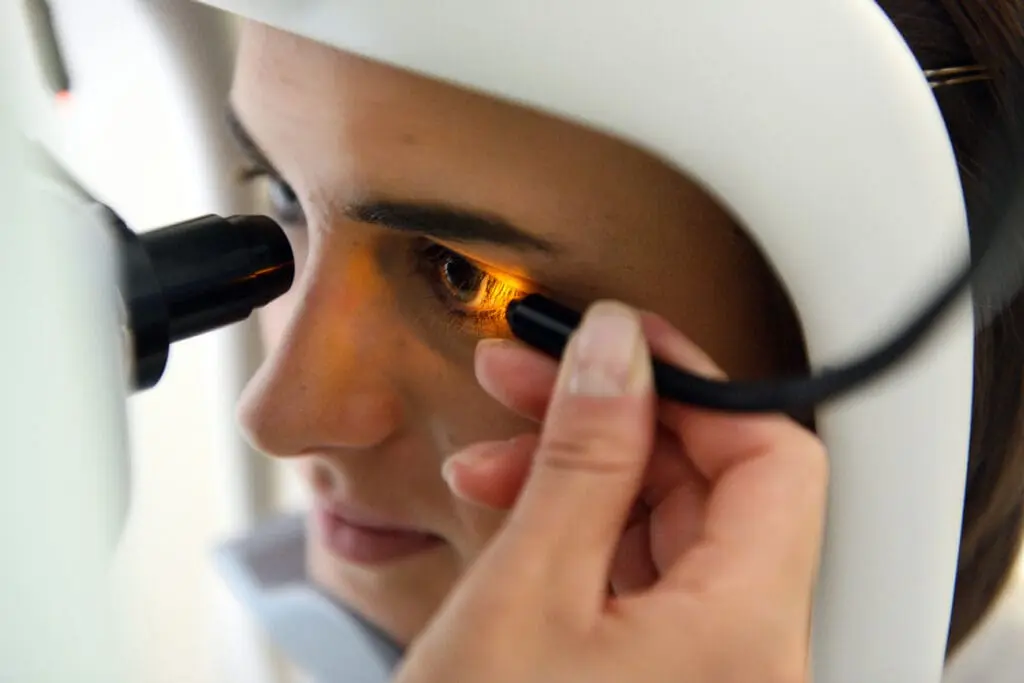
A full set of advanced diagnostic tests (corneal maps, OCT scans, IOL power calculations, dry eye assessment) arecarried out.Your eyes may be dilated during your diagnostic appointment, so we advise that you do not drive to or from this visit.

Consultation

Review results, discuss lens options, risks/benefits, and select your plan. 

Treatment

Under local anaesthetic, a tiny, biocompatible lens is gently implanted behind the iris and in front of your natural lens, providing instant visual clarity without altering the cornea.

Aftercare

Following ICL surgery, you will receive tailored aftercare including prescribed eye drops, scheduled follow-up visits, and access to our 24-hour helpline. Most patients notice clearer vision within a day, with full visual stability developing over the following weeks.

A couple with rucksacks holds hands while hiking on a rocky path surrounded by grass and bushes, enjoying the sunset—an adventure made clearer thanks to implantable contact lens technology.

Costs and Finance Options

Centre for Sight offers transparent, fixed pricing for Implantable Contact Lens (ICL) surgery, with optional finance plans to make treatment more accessible.

  • Implantable Contact Lens Prices (self-pay, per eye):
  • Consultation (from): £445
  • Non-Toric Implantable Contact Lens: £3,714
  • Toric Implantable Contact Lens: £4,074

Inclusions:

  • Procedure cost and implantable lens (deposit included)
  • Structured follow-up for six months
  • 24-hour emergency helpline and personalised aftercare plan
  • All necessary diagnostic testing and post-operative reviews

Finance Options:
Patients can choose 0% APR payment plans for up to 24 months via V12 Retail Finance (subject to status).
A deposit is required at the time of lens order, with the remaining balance spread across convenient monthly instalments.

Read More

FAQs

What is an ICL and how is it different from LASIK?

An ICL (implantable contact lens) is a thin lens placed inside your eye, between the iris and your natural lens. Unlike LASIK/PRK, which remove corneal tissue to reshape your eye, ICL is additive and reversible, the lens can be removed or exchanged later if needed.

Will I still need glasses after ICL?

Many patients achieve 20/20 or close to it and no longer require glasses for distance. However, some may still need weak reading glasses (especially with presbyopia) or minor enhancements in rare cases.

Is ICL surgery painful?

No, anaestheticeye drops are used, and the procedure is generally comfortable. You may feel mild pressure or light sensitivity. Postoperative discomfort is typically minimal.

How long does recovery take?

You may notice clearer vision within hours to days. Full visual stabilisation may take a few weeks. You’llhave several follow-ups early on (day 1, week 1, month 1, etc.).

Can the lens be removed or changed later?

Yes, one of the key advantages of ICL is reversibility. If your refraction changes or complications develop, the lens can be explanted or exchanged.

What are the risks?

Risks include infection, increased intraocular pressure, cataract formation, lens misalignment, glare/halos, endothelial cell loss, and in rare cases vision loss. Your surgeon will explain all risks in your consent process.

Am I a good candidate for implantable contact lenses?

You may be a candidate if you are above ~21 years old, have a stable prescription, healthy eyes, sufficient anatomical measurements (e.g. chamber depth), and realistic expectations. You may not be suitable if you have a shallow anterior chamber, low endothelial cells, active eye disease, or unstable refraction.

How much does it cost?

Costs vary by region and clinic. As a UK example, the non-toricICL is around £3,714 per eye and toricICL around £4,074 per eye, including follow-up care. Finance options are often available. 

What happens if I develop cataracts later in life?

If cataracts develop, the ICL can be removed at the time of cataract surgery and replaced with a suitable intraocular lens (IOL). Your surgeon will plan accordingly.